How much does it actually cost of living in Haikou as an international student in China?
If you’re reading this blog, I’m assuming that you’re thinking of studying in China. A quick disclaimer that this is based on my own experience as an international student in Hainan, China, because even when compared to same-country peers in the same university, I did some things differently, and not everyone has the same lifestyle choices. Keep in mind too that costs will differ quite a bit depending on your location, major cities like Shanghai and Beijing will definitely hit your wallet harder than Hainan.
I’ll break down all my expenses so far as an international student living in China. I hope this will be helpful for you guys to estimate your budget as a student.
One part of starting a new life in a new country, far away from your parents, is that you start to become more conscious of your spending. I remembered feeling shocked when I realized I was free to spend my money however I liked. It also feels slightly dangerous because I’m scared of overspending. More freedom actually means more chances of regret. 🫠
I’m trying not to be too hard on myself because it’s everyone’s first time living; I can’t do everything right from the start. It took experience to develop strategies on how to spend my money.
ROOM SUPPLIES
This is where most students will spend the most money at the beginning. I’m talking about buying a broom, a trash can, a mop, etc. There was a supermarket where my roommate and I bought room supplies, and we split the bill. Later on, we bought more things online, because everything is cheaper online here.
The university didn’t provide us with a bed; they only gave us a wooden structure to place a bed mattress. So I bought a thin mattress from the school supermarket. I could’ve bought it online, but waiting for the online delivery at that time will take too long.
Overall, I think my roommate and I spent 600-700 yuan together on the room supplies. I spent money on things that seemed necessary at the time. If you want to buy cooking supplies and extra room things, like a cozier chair or other room decor, then it’ll cost more.
After those initial expenses, food is the biggest expense every month for me, mainly because in the first semester here, I didn’t cook. I used to always buy food from the canteen. I didn’t start cooking until winter break, and just in time too, because there’s only one canteen open for the winter break.
FOOD
I don’t think living in Hainan is expensive, but ultimately, how much you spend depends on your own financial decisions and how frugal you are. For example, cooking is considered to be the cheapest way to get meals, but to be fair, it also depends on what ingredients you buy. And if you cook but also spend so much money on snacks and drinks, everything will still add up.
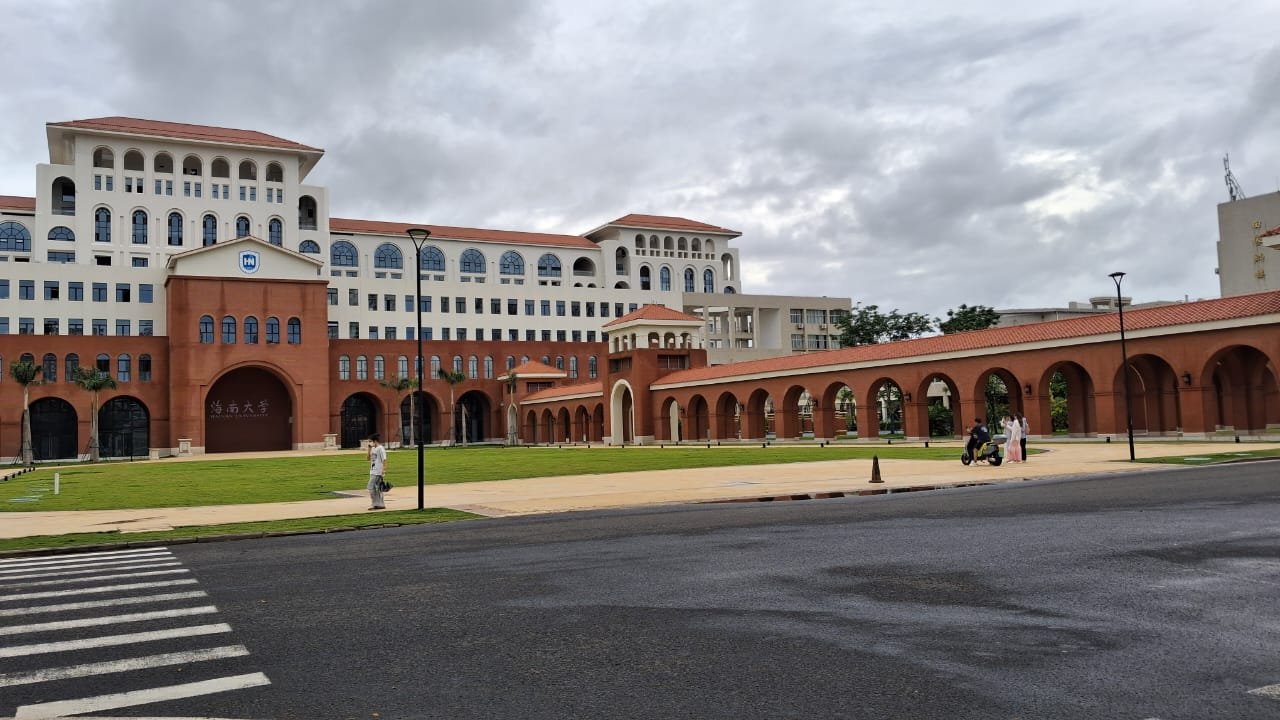
At the university I go to, there are many canteens with many food options. At Hainan University, specifically, there are 12 different canteens with many food stalls. I think there are enough food options to not get bored eating at the canteens.

My go-to is usually 自取餐, it’s this stall with many different side dish options that are later weighed, and that determines the price (shown above). This price doesn’t include the rice. If you are extremely careful like me, one meal could be 6-10 yuan. When I peek at how much the Chinese people pay for their meals, it could range from 13-20 yuan, so like I said, your spending is based on your own conscious choice.
There are a lot of other stalls, like for noodles, dumplings (饺子,馄饨), bread, roasted meat, fast food, wraps, porridge, etc. If I look at the prices in general, they can cost 8-23 yuan.
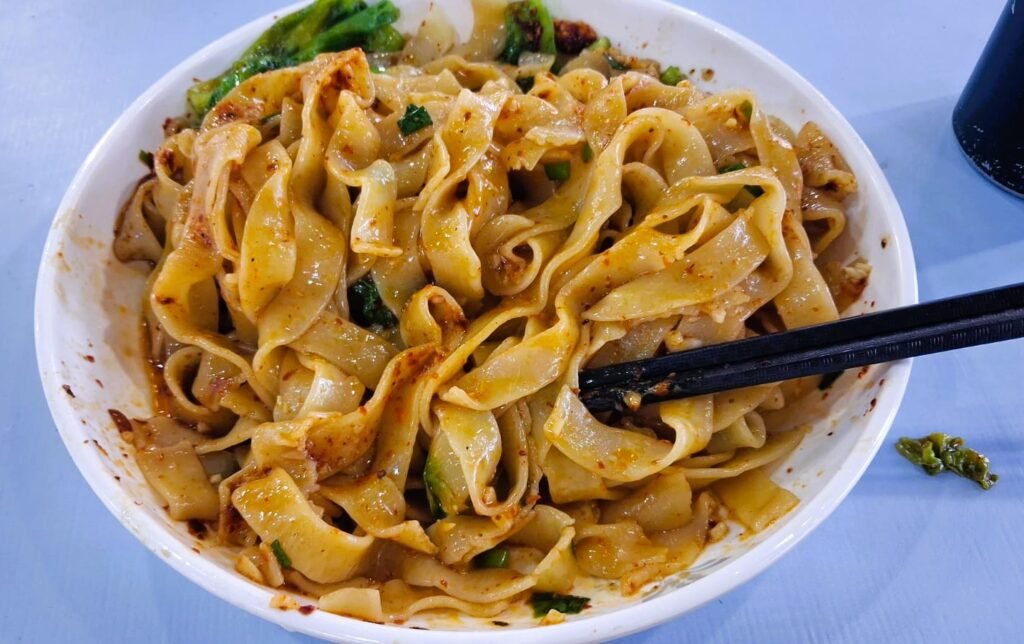
This is 油泼面 (YouPoMian) I bought from the canteen that’s 11 yuan.
The canteens also provide food for breakfast; they have bread that costs around 3-12 yuan. I love the bread here. They have sandwiches and bread with meat floss and many other options.
You can also venture outside of campus to buy food. There are restaurants outside of the campus that are clean and have good food. The prices start from 12 yuan. There are also night markets with a variety of food options, such as seafood, noodles, satay, etc. I also love how the food here is usually in big portions; it really does make me feel like the money is worth it.
When I always rely on canteen food, I usually spend around 700-800 yuan a month. But in January, I started to try cooking on my own, and I found out how much less it costs to cook your own food, even at the expense of your time. One of my friends said that she spent around 300 yuan a month on food when she was studying.
SNACKS AND DRINKS
If you love buying drinks, there are many options to choose from. They have Luckin Coffee here and other drink brands. There’s a Mixue store at the school mall. These cafe drinks start from around 12 yuan.
In every canteen, there’s always at least one stand where they sell packaged drinks starting from 2 yuan. This is where money quietly disappears for me, and it took a while for me to realize it made a difference.
I used to buy drinks sometimes that could cost 3-6 yuan because it was so hot at the time, but then I stopped when I realized it all added up. I also didn’t realize that buying biscuits added up too.

If you like bread like me, you’ll be delighted to find that there are many bakeries here. I love that the bread and cake here aren’t that sweet. Prices start from 9 yuan here.
DORM
For the dorm rent prices, you need to search them yourself for the specific university you want to go to, because they will be different for every university. For Hainan University, where I go, it’s 3200 yuan every semester for every academic semester if you want a room for yourself, and 1600 yuan every academic semester for two people in a room. (I’m only providing information specifically for international students; it’s different for locals.)
Oh, and you can opt to live off campus as well; you just need to inform the university about that. In my class, I know two women from Arab countries who live off-campus. I think it’s mainly because there’s a broader option for halal food outside of campus. I suppose it’s also cozier to rent somewhere else.
The drawback is that it takes longer to get to classes. I know that to get from the gate to the classes and back, they usually get on the white mini buses that cost one yuan per ride.
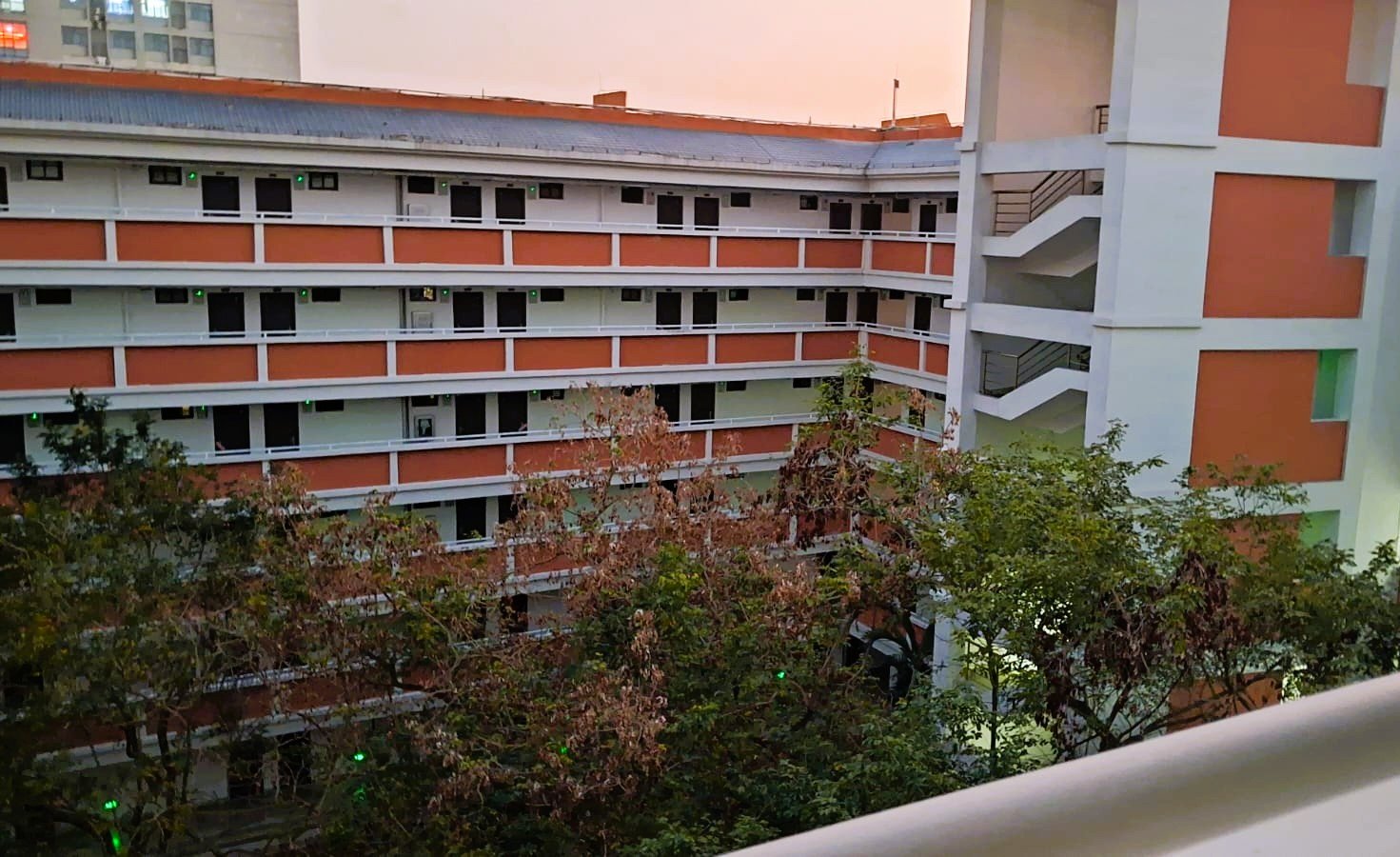
My room is shared with one roommate, and it has two structures to place the bed mattress; two tables with a wardrobe, a cupboard, and chairs; one bathroom; Wi-Fi; and air-conditioning. My roommate and I pay 10 yuan every month for the Wi-Fi. I think overall, the facilities provided are decent.
Something to note is that when it’s near winter or summer break, you have to choose to fill in one of two forms. If you want to stay at the dorm during summer or winter break, you need to fill out a form stating that you will stay and promising that you will abide by the university dorm rules. This form is important if you want to stay because otherwise, they’ll cut off the electricity and water to your room. If you won’t be at the dorm, you have to fill in a form stating where you’ll go and how long you’ll be leaving.
In a special case, let’s say you’ll mostly stay at the dorm, but you want to travel for some days to somewhere, and then come back to the dorm. You still fill in the first form I talked about, and when you want to leave, you have to fill in a leaving permission form.
I’m on scholarship, so thankfully I don’t need to pay the dorm rent, but I still have to pay for electricity and water every month. It’s paid through a mini-program on WeChat that is tied to the school account.
This is how paying for electricity and water works at the university I go to: you top up a certain amount of money through the mini-program. You’re free to choose how much you want to top up. Let’s say you top up 50 yuan; the more you use electricity and water, the more that number will slowly decrease. So, for example, after 2-3 days, the mini-program shows that you have 45 yuan on electricity.
Oh, and for the electricity section, it’s split into electricity for lights and electricity for the air conditioning; they’re paid separately.
Just make sure you top up the electricity and water before the numbers go below zero. I forgot to check twice, and twice the lights went out. :’D But I learned from my mistakes, and now I check the mini-program every day.
I’m still trying to figure out how much electricity to top up for a month. I think 50 yuan can last for more than a month. It definitely costs more for water because, aside from showering, I also need it to wash the dishes. I tried to top up 100 yuan for it, but I still think that wasn’t enough to last for a full month.
SUMMARY
To summarize everything in a clean table, based on my experience and knowledge, here’s your estimated monthly budget in Hainan.
| CATEGORY | ESTIMATED COST |
| Food (canteen) | ~700-800 yuan (Disclaimer: this is me being as frugal as possible. It can be stretched to 1000 yuan) |
| Food (cooking) | ~300-500 yuan |
| Dorm | Shared = 1600 yuan/semester Alone = 3200 yuan/semester |
| Utilities | ~50-150 yuan |
| Snacks/drinks | ~100-300 yuan (dependent on your lifestyle) |
So on average the cost of living in Haikou as frugal student in Hainan might spend around 900–1200 yuan per month excluding dorm rent.

Leave a Reply