People keep saying “Compare yourself only to the version you were yesterday”.
I get the sentiment but what if I don’t feel like I made progress most of the time?
Learning Mandarin can get frustrating a lot of times. Today I’d like to share my whole Mandarin study journey up until now.
Part 1: Learning Mandarin Before China: My Early Struggles
Why Attending Class Alone Was Not Enough
I would say that even though I took Mandarin classes in high school, your real level still depends on your willingness to learn it. I noticed that most of the kids who are noticeably better than others also learn Mandarin outside of school. What I meant by “better” was being able to recognize more characters (without pinyin) a lot quicker.
I recall that my mistake was not doing extra studying outside of classes. Language learning in general just isn’t something you learn just by attending classes. So after I realized that I took tutoring classes. I also read the book on my own and read further ahead than the chapter studied at that time. I was already studying HSK 4 by the time I was in my third year of high school.
How to Actively Improve Your Mandarin:
I’d say that you have to look actively for ways to improve your Mandarin. You could buy a book, look for video resources online, book classes, etc.
I like to think that improvement is always through intentional effort.
It’s like how Sang Yan (桑延) from The First Frost《难哄》, actually made intentional effort to get closer to the girl that he liked by creating “chances” for them to meet. If they were only deskmates, the romantic plot wouldn’t progress.
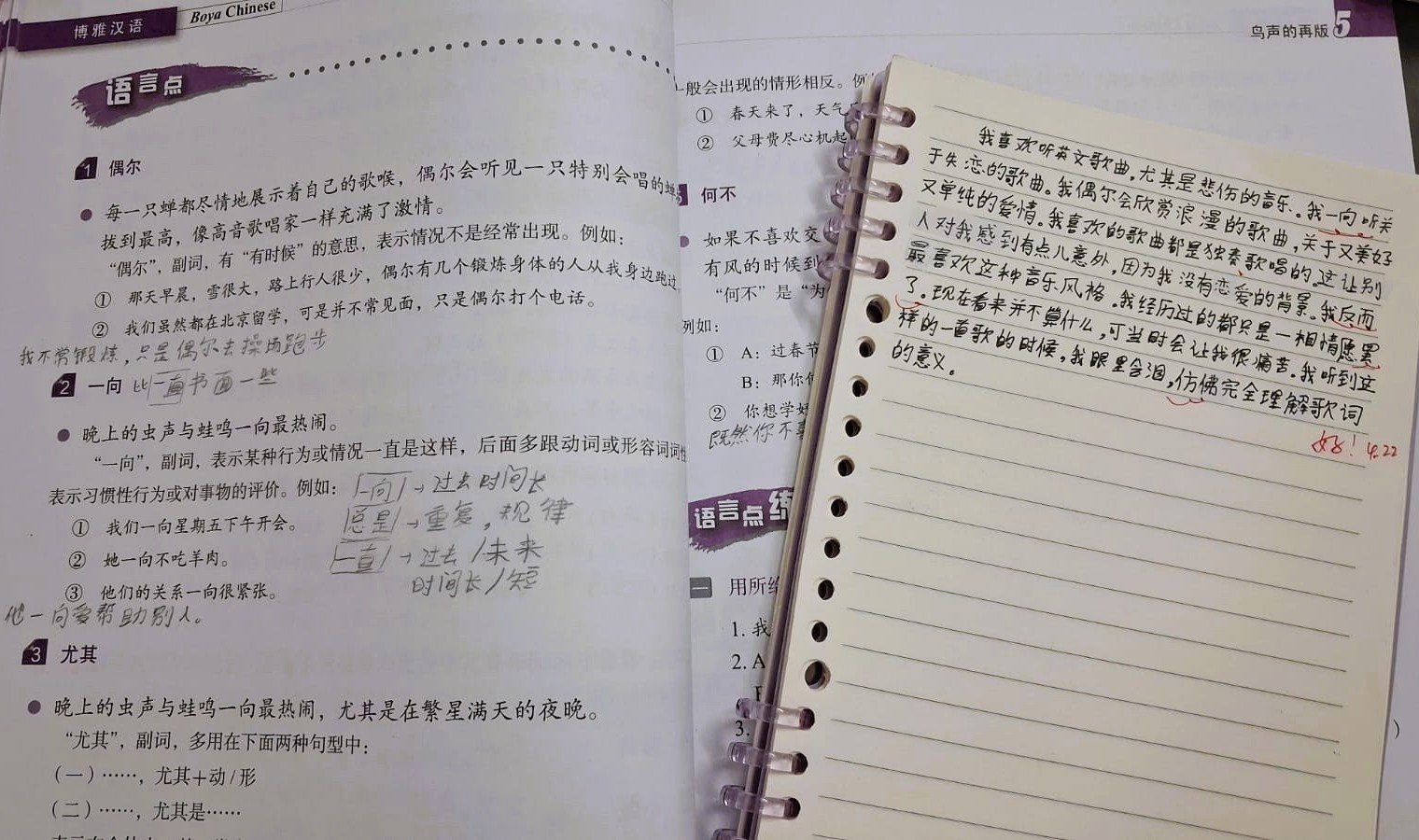
Everyone’s study method is different. I prefer the classic method of using a book to practice reading, learn grammar, and gain vocabulary.
The downsides of studying in a country where Mandarin isn’t actively used is that there are very limited opportunities to practice speaking.
I could barely speak Mandarin when I was in high school.
Part 2: Learning Mandarin in China: Real Exposure, Real Growth
How I Slowly Built Mandarin Speaking Confidence
I remembered meeting Chinese people at the airport but I was so nervous to speak Mandarin. I guess that was my first real exposure to Chinese people.
I think I got better the more I forced myself to talk, both to locals and in class participation. My main problem now is that even though I can speak and people understand what I mean, my pronunciation is still a wreck.
My mistake is that sometimes I prioritize fluency over tones, and that influences my speaking. I’ve started to pay attention to tones more recently so I hope things will improve.
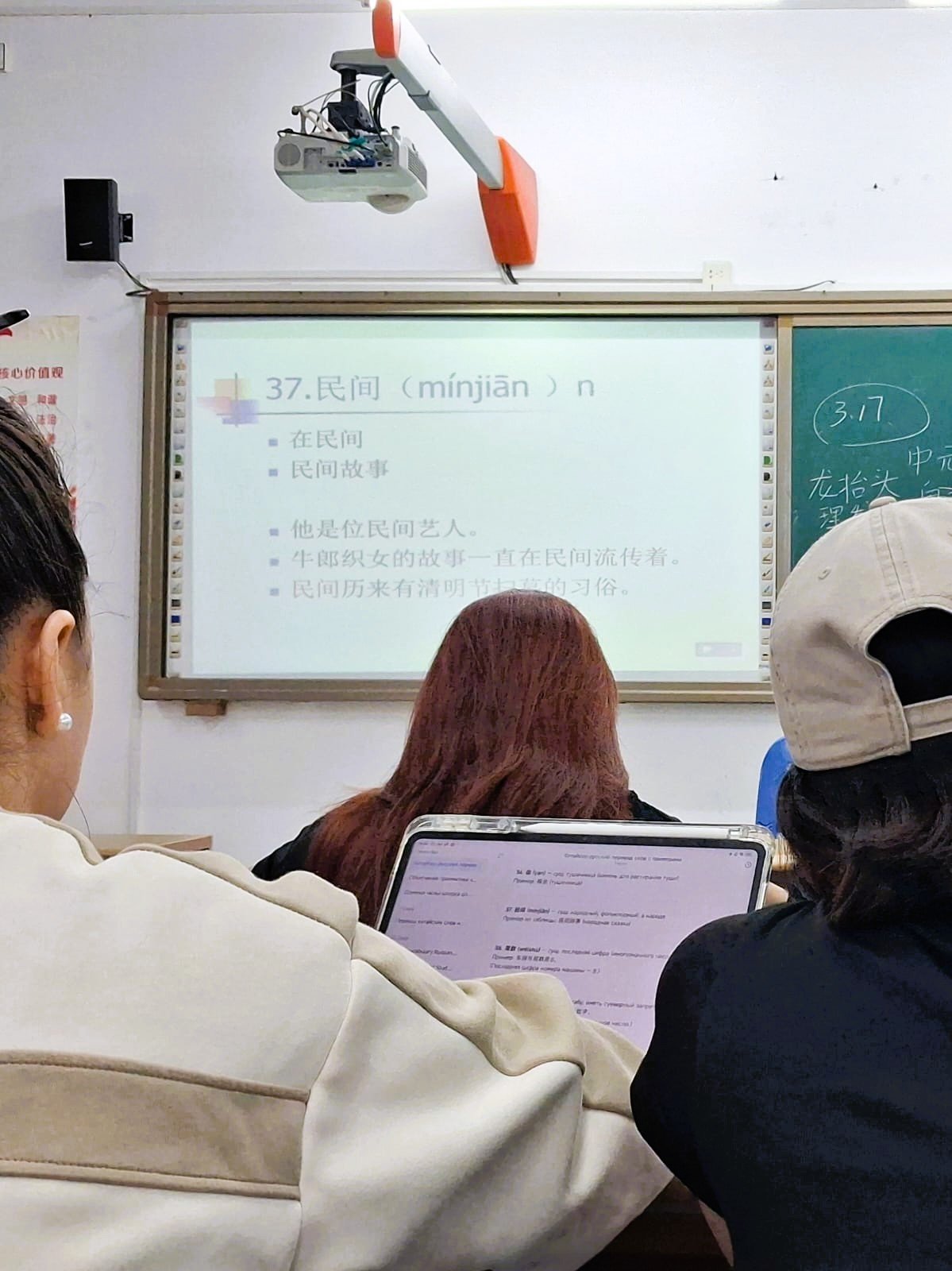
For example, there are a bunch of times where the teacher reads a sentence on the slides and we’re asked to repeat after. This is where I pay attention to the tones they use.
I think that I’m still insecure about my speaking skills. My problem is that I’m not confident about it, and that affects how I speak (imposter syndrome effect). It’s like a self-fulfilling prophecy. It also makes me a bit slow in my responses.
Why Recognizing vs. Writing Characters Felt So Different
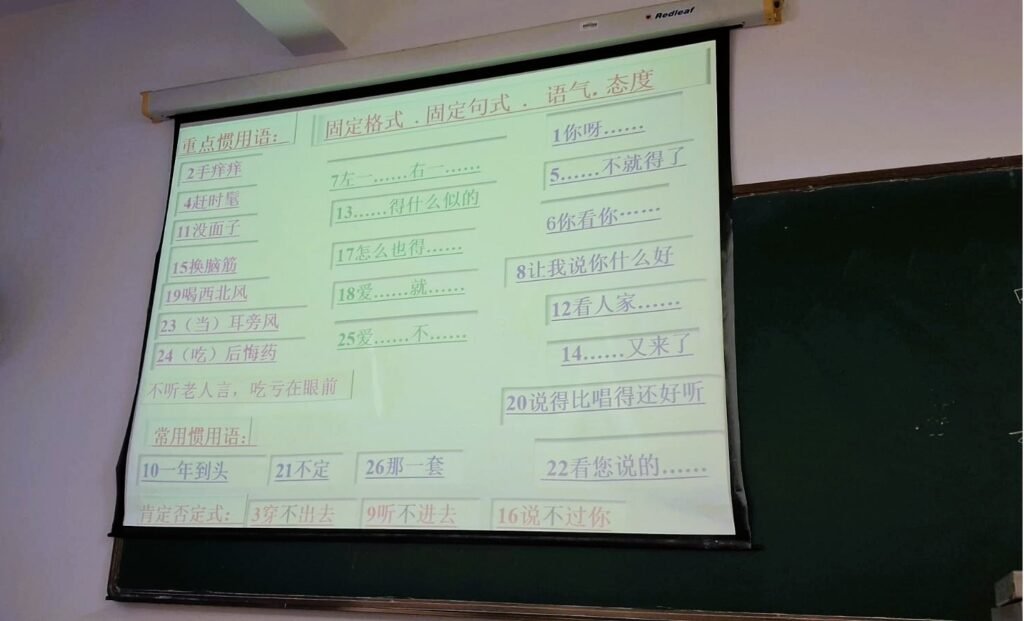
Remembering all the components in character is pretty difficult. I usually remember things one day and forget them by next week. I’d score perfect on 听写 (the teacher says a word and we have to write down the character, like in a spelling contest), but I’d forget how to write the character next week.
Recognizing a character is so different from being able to recall how to write the character. I don’t write in Mandarin other than when taking notes or writing homework.
When Someone Criticized My Mandarin (And How I Dealt With It)
And it sucks feeling like my Mandarin sucks among seniors, though I know it’s unfair to compare because they clearly have more experience.
I’m extra sensitive to blunt criticism and I kind of overheard some senior saying that my Mandarin still isn’t that good. I was a bit down about that for a while.
I actually was overthinking about it. My Mandarin teachers seem to consider me as a great student. But now I’m suspecting that my teachers’ overestimate my skills. I don’t know who’s judgement to trust.
I guess it’s more like, I felt like I worked harder and pushed myself and someone’s casual comment oversimplifies my capability in a few words without accounting my capabilities as a whole.
It made me slightly spiteful sometimes, I’ve had minor “I’m not incapable” moments. I think about things like “see I could go to the international office and talk to the teacher” “see I could explain a story well in this audio recording” “I could talk to a Chinese student”.
Don’t lie to me and tell me you’ve never thought these kinds of things in your head.
I can be quietly petty sometimes.
It’s not “I’ll prove them wrong” and more like “Deep down I know exactly where I stand”.
Objectively, I had a good headstart compared to people who only started learning Mandarin in China.
Part 3: My HSK 4 Journey: Preparation, Struggles, and Final Score
How I Got Into the HSK 4 Class in Hainan
I was in intermediate class by the time I got to Hainan, so there was an HSK 4 course. By that time I felt that I only learned half of the material.
In the early sessions of the class I did surprisingly okay, with some ups and downs. And then I started learning more in my room, doing questions by myself and reviewing wrong answers. I also learned more vocabulary along the way.
My teacher actually said that it’s better to do questions rather than learning vocabulary. Later on I discovered that she’s right, by doing practice questions you learn words by seeing its application in sentences.
It came to a point where I scored particularly well on a mock test. My teacher urged me to take the test in October, but the registration deadline had closed. So I took the test in November.
My HSK 4 Study Method: Mock Tests, Vocabulary, and Grammar
My study method was a mix of learning from the vocabulary list, learning grammar, and doing practice questions. Most of my studying is by doing mock tests.
I’m always analyzing carefully after every mock test for places I need to improve on like what vocabulary I didn’t know or what grammar structure I didn’t understand.
I’m a perfectionist so it’s always frustrating seeing my grades fluctuate slightly on each mock test. I wanted to score as high as possible. Doing well on a mock test in reality creates pressure for me to do better or at least just as good on the next test.
The lowest score I ever got on a full mock test was 256, and that one was because the grading system was different for the writing section. Even if there was only one mistake in a sentence, no points will be given for that number. My highest score was 293 on a mock test (this is one of the mock tests that’s more accurately graded by the teacher) . It’s both a blessing and a curse.
Kudos to my nice class teacher who sent me many mock tests for me to practice with. She also gave lots of advice for the test.
My struggle on the listening part is keeping my attention focused. I wander off sometimes and think about other things. That’s why I even deleted my instagram a few days before the exam. Scrolling really did affect my attention span.
I could actually feel the difference of not scrolling for even a day. This is one of those moments where I almost forgot that I could change my life significantly just by removing something that just wasn’t beneficial for my life.
Next is the reading part where I struggled with the rearranging sentence fragments. It took me a while to improve my sense of language to tackle that. I also got free tutoring from my university for the HSK 4 test and the teacher broke down the logic behind the sentence ordering, which helped me a lot.
I chose the computer-based test so I ended up typing the answers. My struggle with written mock tests is that the sentences I can write are limited because there are many characters that I forgot how to write. With computer based tests I can type anything as long as I know the pinyin.
But the drawback is that with computer based tests I tend to take a bit of a risk and write something slightly long or a bit more complex than just anything that’s simple and straightforward. I just couldn’t help it. :’D
Oh and I was so stressed about preparing for HSKK. I couldn’t remember the sentences I was supposed to repeat perfectly and I struggled with the questions where I had to explain the picture and answer questions in Mandarin.
HSK 4 Results and What’s Next for My Mandarin Journey
After 2 months in China, my HSK score was 289 (Reading 100, Listening 100, Writing 89) and my HSKK score was 72.
My teacher said, ‘’祝贺你,成绩不错‘’ 😀
After I updated her with the HSKK score, she asked me if my speaking score wasn’t as I expected. Actually, I didn’t expect to get past 70 at all so I was pretty grateful for my score.
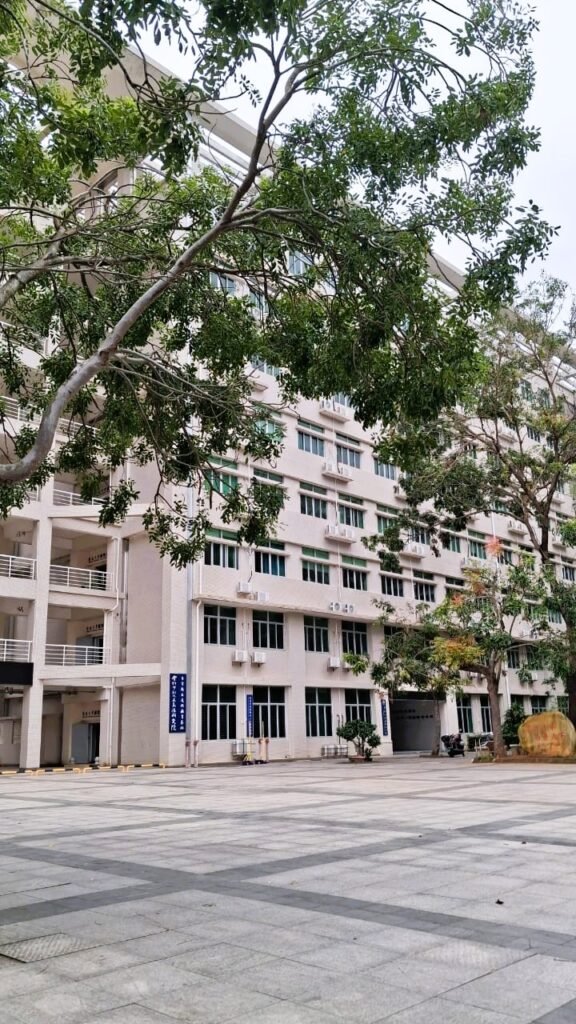
If I go back to my home country, I think I’d still say to them that I’m still not that good at Mandarin. But looking back, I’ll admit that I know so much more now and was even more capable than who I was 6 months ago.
My teacher advised me to take HSK 5 sometime to look at my skills. She said if possible, I should take HSK 6 instead of HSK 5 for the graduation requirement. If I could get a level higher, it would be great, she says.
可是现在HSK6级谈不上。I’m still improving a lot, slowly gaining confidence through experience through practice and gaining more exps! And you know what? Turns out progress isn’t felt everyday, it’s what you feel after looking back months later and discovering that there’s an undeniable difference now, and you’ll be glad you didn’t give up! 只要坚持,水滴石穿!!





Leave a Reply